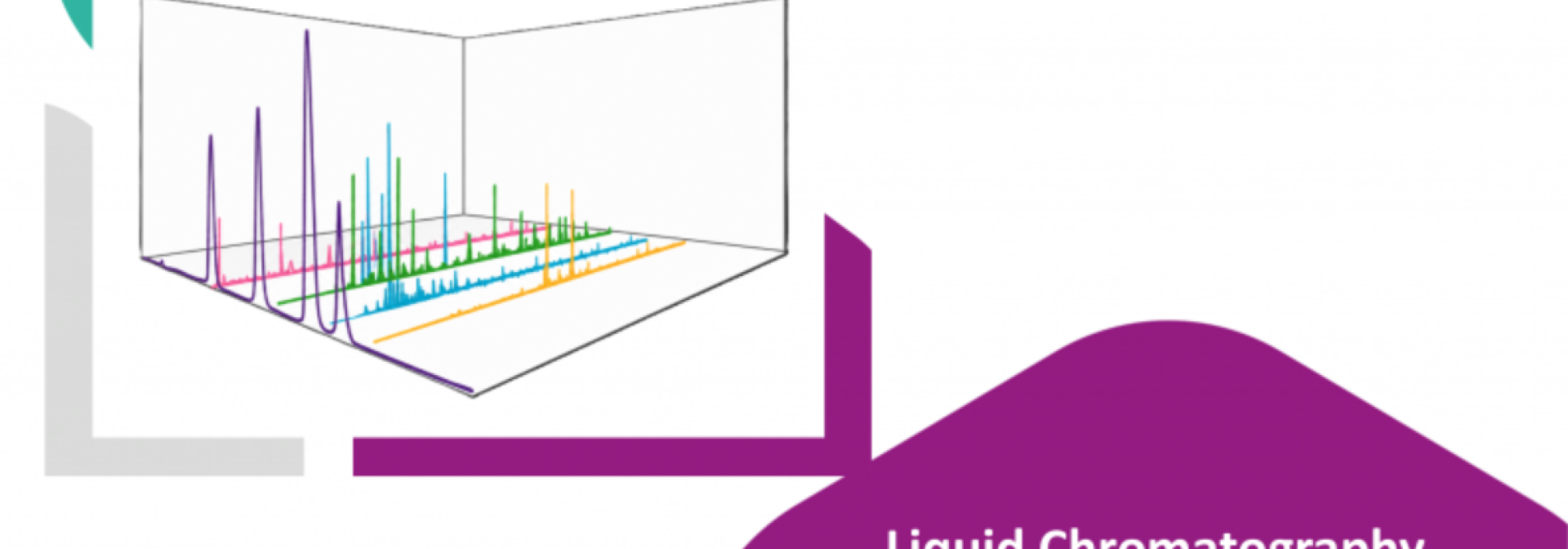
Any research project requiring the analysis of organic molecules benefits from LC-HRMS. This technique can be used to annotate, identify and quantify organic compounds in different matrices. However, some concepts, procedures and data analysis tools are not readily learned by or known by researchers, mainly those from areas other than chemistry/instrumentation. The objective of this course is to endow researchers with fundamental, data processing and operational knowledge to take advantage over the LC-HRMS technique. The course is a blended course, consisting of two parts.
Part 1. This part will be developed online. Concepts and procedures are introduced and examples presented. The online course is accessible to anyone at link https://www.marinetraining.eu/node/6286 and can be found through the 'more information' link at the top right corner of the page. From
Part 2. This part will be hands-on and dedicated to sample and LC-HRMS preparation for analysis. Researchers will interact with the LC-HRMS system at Centro de Ciências do Mar Algarve (CCMAR). Additionally, succesful applicants will have the opportunity to bring sample extracts for analysis on-site in correspondance with the course organisers. This part will take place from the 19th to the 21st of October 2026. While lunch will be provided for the days of the course, the course organizers are not responsible for travel/accommodation arrangements and participants are expected to take care of this independently.
Programme (onsite)
19th October
1 – The LC-HRMS main components.
- a) LC – Pumps, autosampler, column compartment
- b) MS – Ion sources, nitrogen & helium supply, analyzers, calibration
- c) Infusion of solutions – Experimental insights into the concepts of m/z values, isotope distributions, resolution, accuracy and MSn
2 – Quantification of lipophilic EU regulated marine biotoxins Okadaic Acid (OA), Dinophysistoxin-1 (DTX-1) and Dinophysistoxin-2 (DTX-2) in mussels.
- a) Sample preparation and standard addition calibration
- b) MRM versus full scan-high resolution for quantification
- c) Analysis of mussels’ extracts containing OA
- d) Processing of LC-HRMS profiles and validation
20th October
1 – Analysis of emergent marine biotoxins: tetrodotoxin (TTX).
- a) Choice of chromatography based on the molecular structure
- b) RP-18 versus HILIC separation
- c) Sample preparation
- d) Analysis of extracts and processing of profiles containing TTX
2 – Annotation and identification of additives in end-of-life tire rubber particles.
- a) Data dependent LC-HRMS
- b) Method parameters
- c) Annotation sources
- d) Processing of LC-HRMS profiles
- e) Analysis of standards and identification
- f) Analysis of natural extracts
21st October
1 – Detection of microplastics on beach sand through their markers.
- a) Untargeted versus targeted analysis
- b) Markers and biomarkers
- c) Analysis of samples extracts
2 – Questions and answers.
3 – Profiles of samples sent by users.
Target Audience
- Early Career Researchers, MSc students, PhD candidates, and postdoctoral researchers seeking to identify and/or quantify organic molecules.
- Research Infrastructure staff, technicians and facility managers seeking training in LC-HRMS.
- Industry professionals and entrepreneurs requiring identification and/or monitoring of key organic molecules.
- Senior researchers and group leaders seeking to expand their workflows.
- Transnational Access (TNA) users of the AQUASERV and other projects seeking for inclusion of LC-HRMS on their proposals.
Learning Objectives
- To understand the fundamentals of liquid chromatography (LC) and mass spectrometry (MS)
- To recognize and understand the main components of a mass spectrometer
- To understand basic concepts and practical aspects of ion formation in mass spectrometry
- To understand the fundamentals of tandem mass spectrometry (MSn)
- To explore the fundamentals of mass spectrometry data interpretation
- To explore the principles of structure annotation based on mass spectral data and mass spectral library search
- To explore the principles of quantitative analysis in LC-HRMS
- To acquire basic knowledge to use the technology in marine sciences and other research fields.
- To get used to common data-handling workflows in target and nontarget analysis
Course Instructors
- José Paulo da Silva, CCMAR, Portugal
- Juan Francisco Ayala-Cabrera, EHU, Spain
- Iker Alvarez Mora, EHU, Spain
- Nestor Etxebarria Loizate, EHU, Spain
Learning outcomes
At the end of the course the learner is expected to be able to:
- Critically select the most appropriate analytical conditions (chromatographic column, ionization source, polarity, etc) considering the structure of the target analytes
- Design the most appropriate tandem mass spectrometry experiment to obtain the structural information required
- Critically select the most appropriate LC-HRMS data acquisition mode to solve a research question
- Fully understand and use of mass spectrometry data (mass spectral data interpretation) to estimate elemental composition, to identify functional groups, and to annotate chemical structures using mass spectral library search.
- Fully understand quantitative/confirmatory analysis using mass spectrometry
Transferable Skills
- Information Technology: Advances in mass spectrometry instrumentation and mass spectrometry database search (as mzCloud).
- Communication: Communication with use of mass spectrometry terminology.
Related events