
Blue Agenda 2026/27
Blue Agenda 2026/27
Discover the ocean
with our team
Agenda Azul brings the ocean to school and connects school to science through a variety of activities designed to inspire students and teachers. Explore our offerings and book activities for your students today.
"Meet a Scientist" Lectures
CCMAR brings the ocean to your school and showcases the work of those who study the sea through talks that are, to say the least, inspiring.
Check out our lecture schedule below and click the button to make a pre-reservation for your students.
Ocean Literacy Workshops
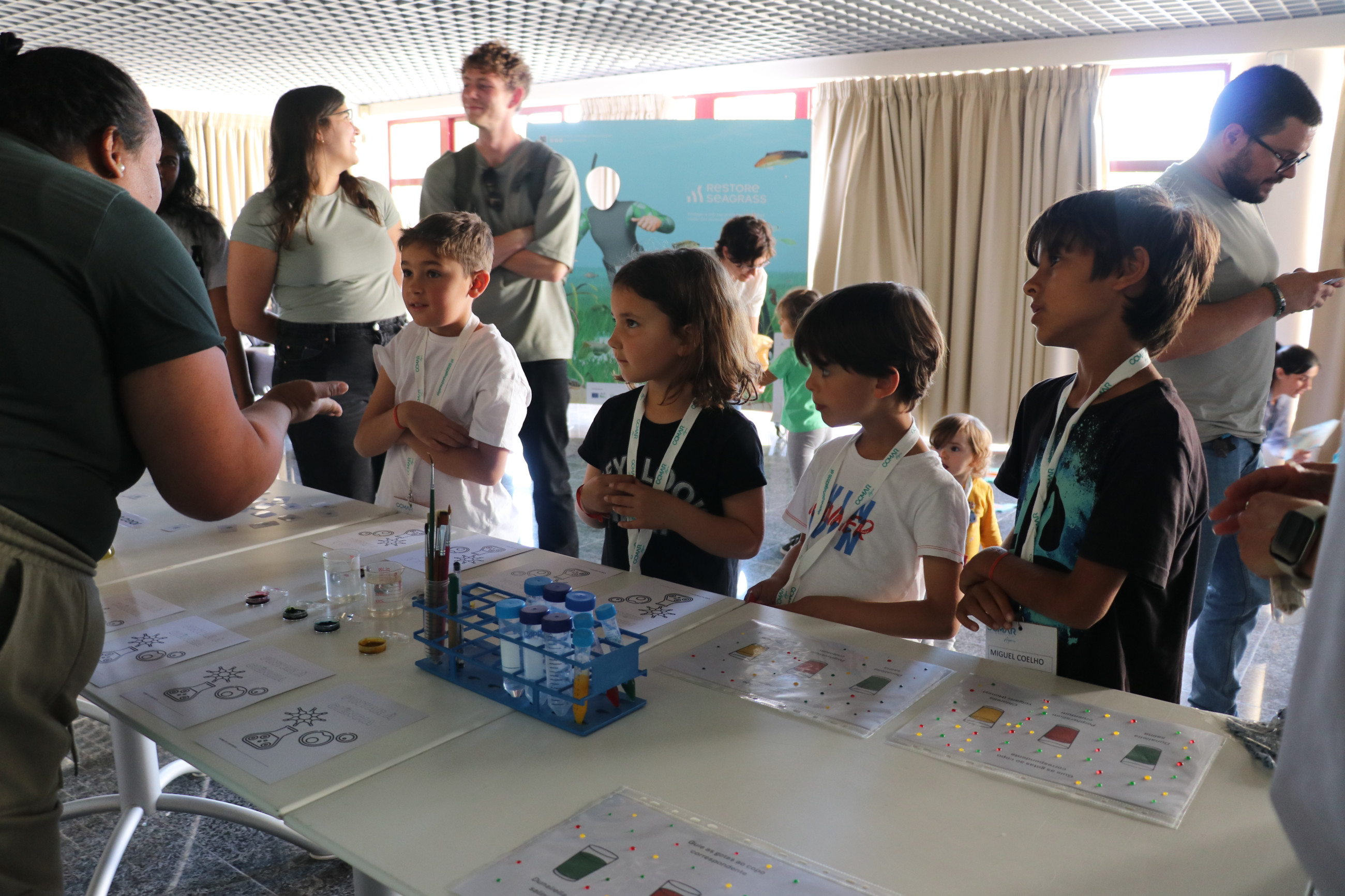
“Let's get hands-on!” We bring the ocean to school with practical and interactive activities that explore marine themes and teach about the importance of the ocean.
Check out our workshop calendar and pre-register your class by clicking the button below.
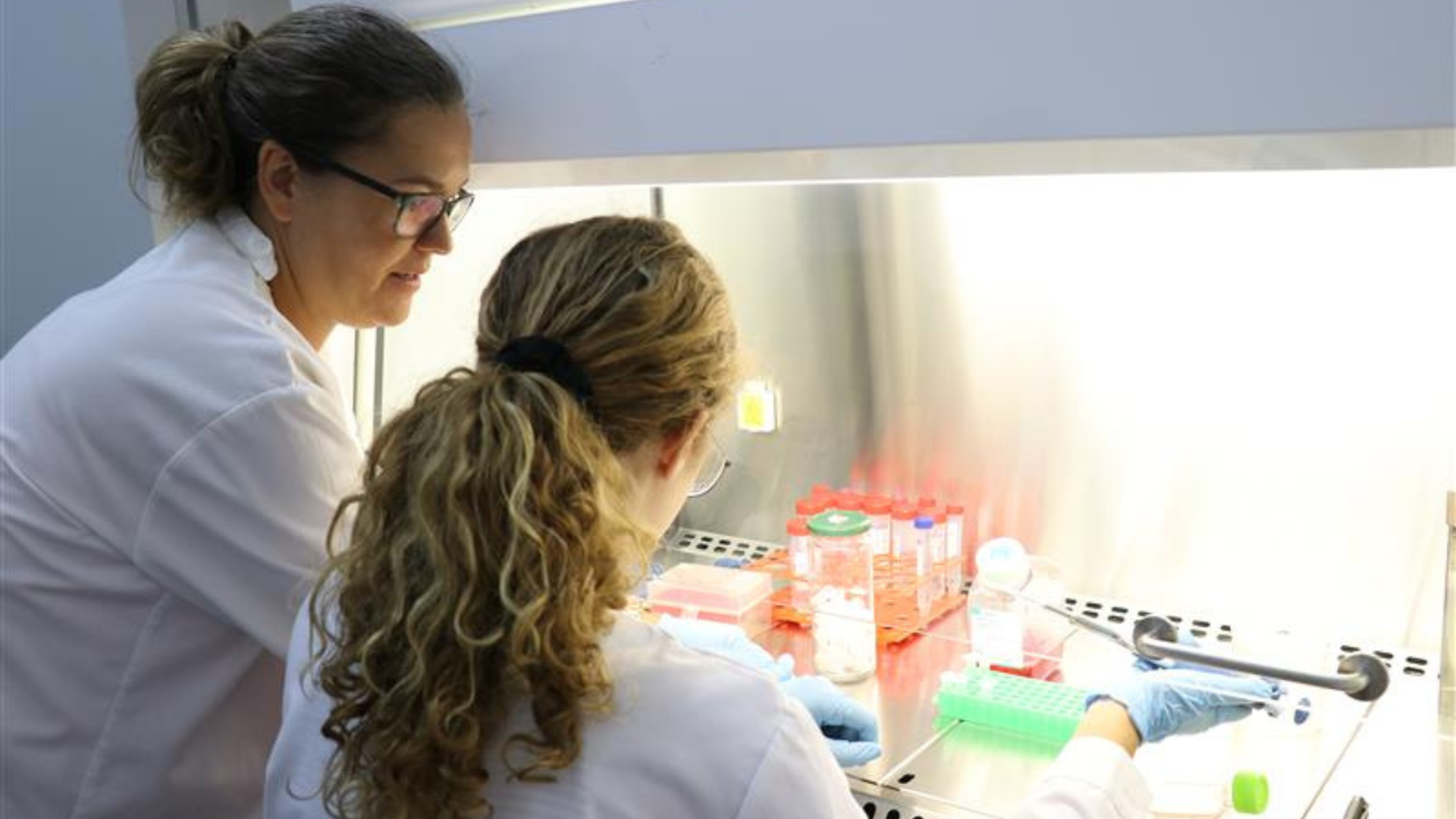
Certified Teacher Training
This year, teachers can also take part in accredited Ocean Literacy training, gaining new knowledge, tools and approaches to bring the ocean into the classroom and inspire their students.
Save the date: November 7, 2026
International Storytelling Competition
Young people aged 15–18 are invited to explore the fascinating world of marine bioprospecting and bring its stories to life through creative digital storytelling. With the help of their teachers, students are challenged to create a short video, discover how marine research can lead to innovative solutions, and share your story with an international audience. Deadline for submitting videos: November 15, 2026.
More information at Outreach - euremap.eu

Marine Science Fair
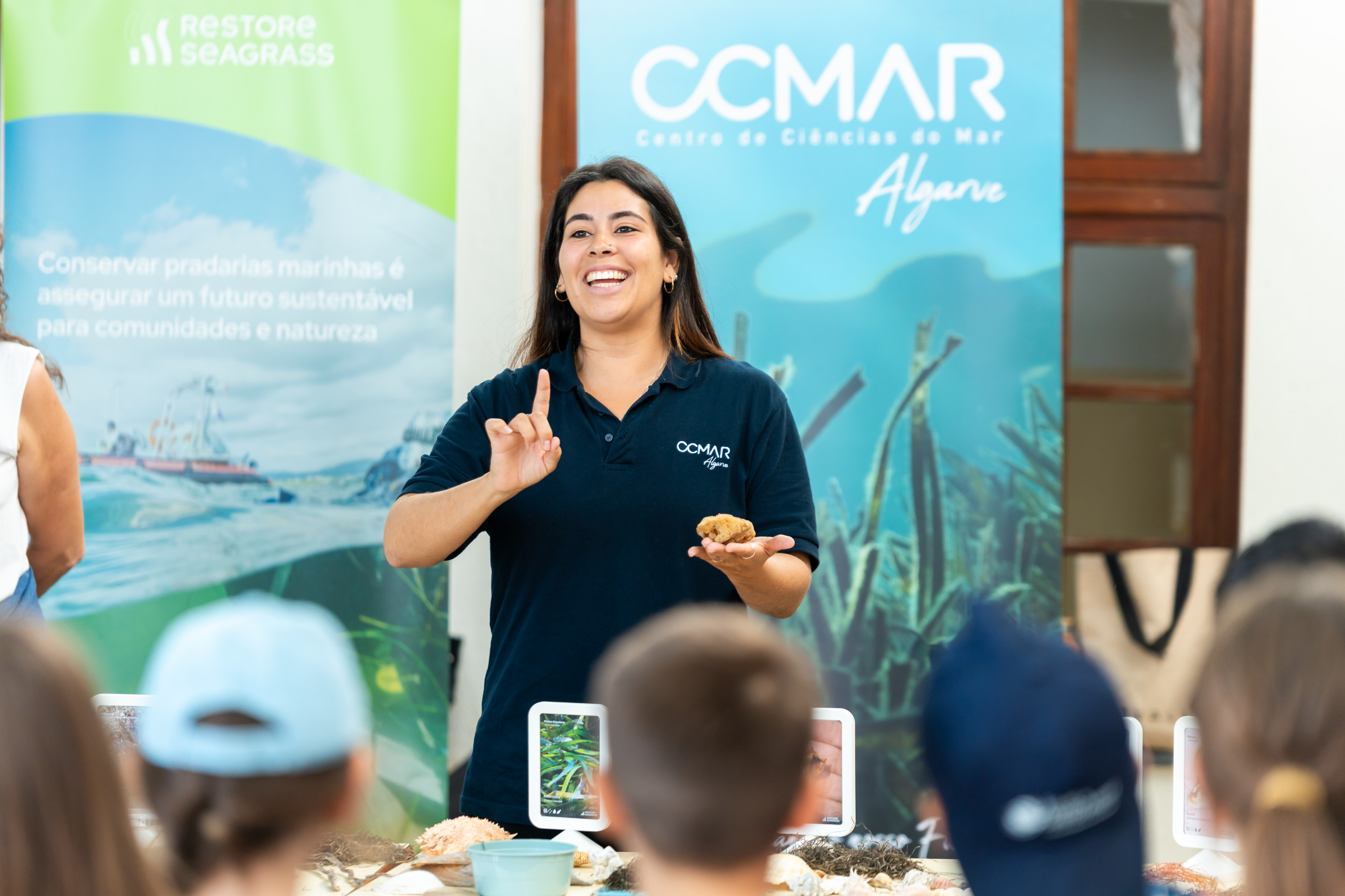
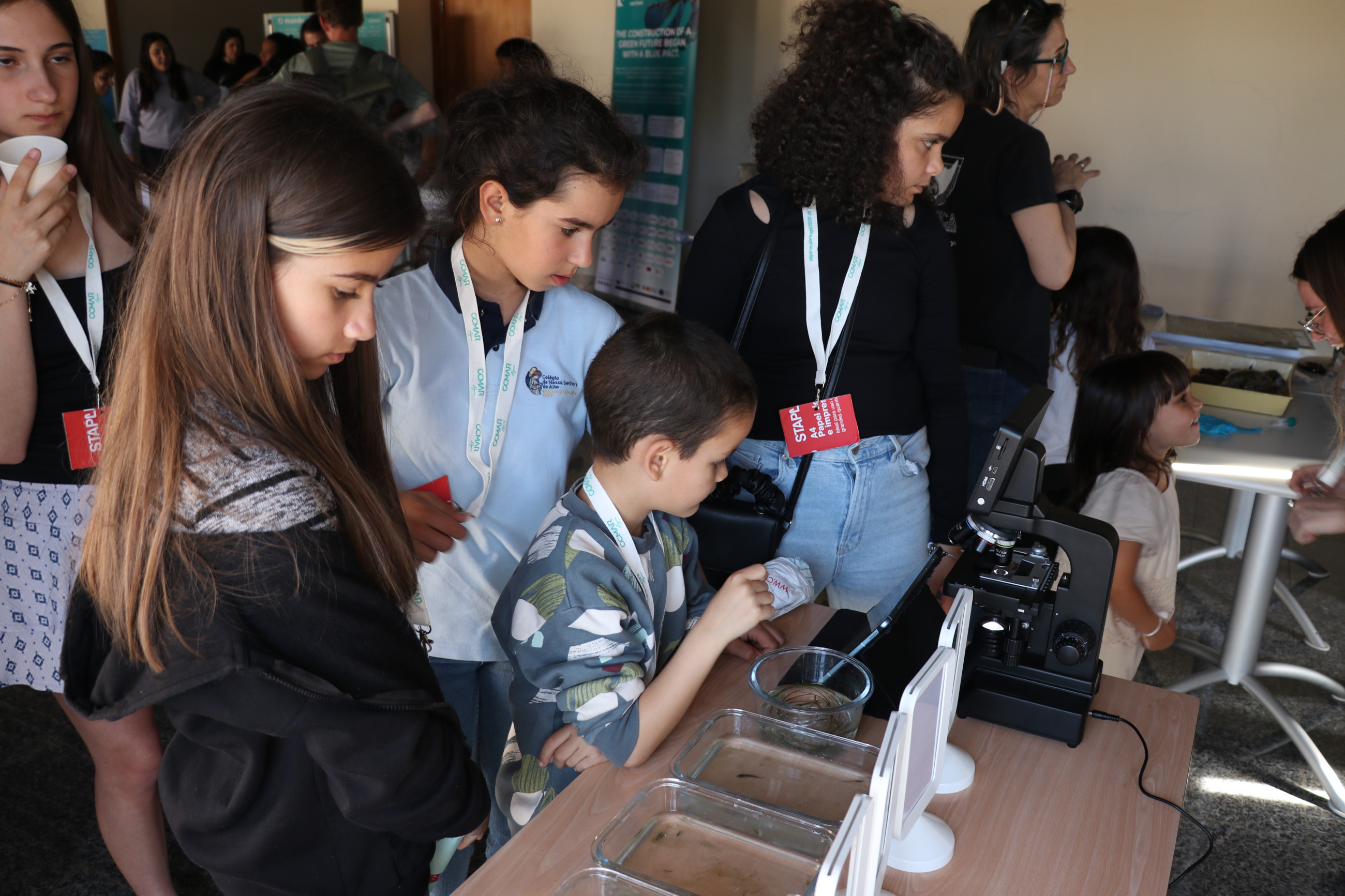
During Science and Technology Week, CCMAR and several partners are organizing a day filled with scientific demonstrations, experiments, and interactive activities to explore the marine world in a fun and hands-on way. Sign up your class and join us.
More information at the bottom of the page.
CCMAR Open Day
Through a tour of our research center, school groups can explore science and discover how we study the ocean.
Don’t miss the opportunity to bring your students to CCMAR on March 5, 2027. See below for registration information.
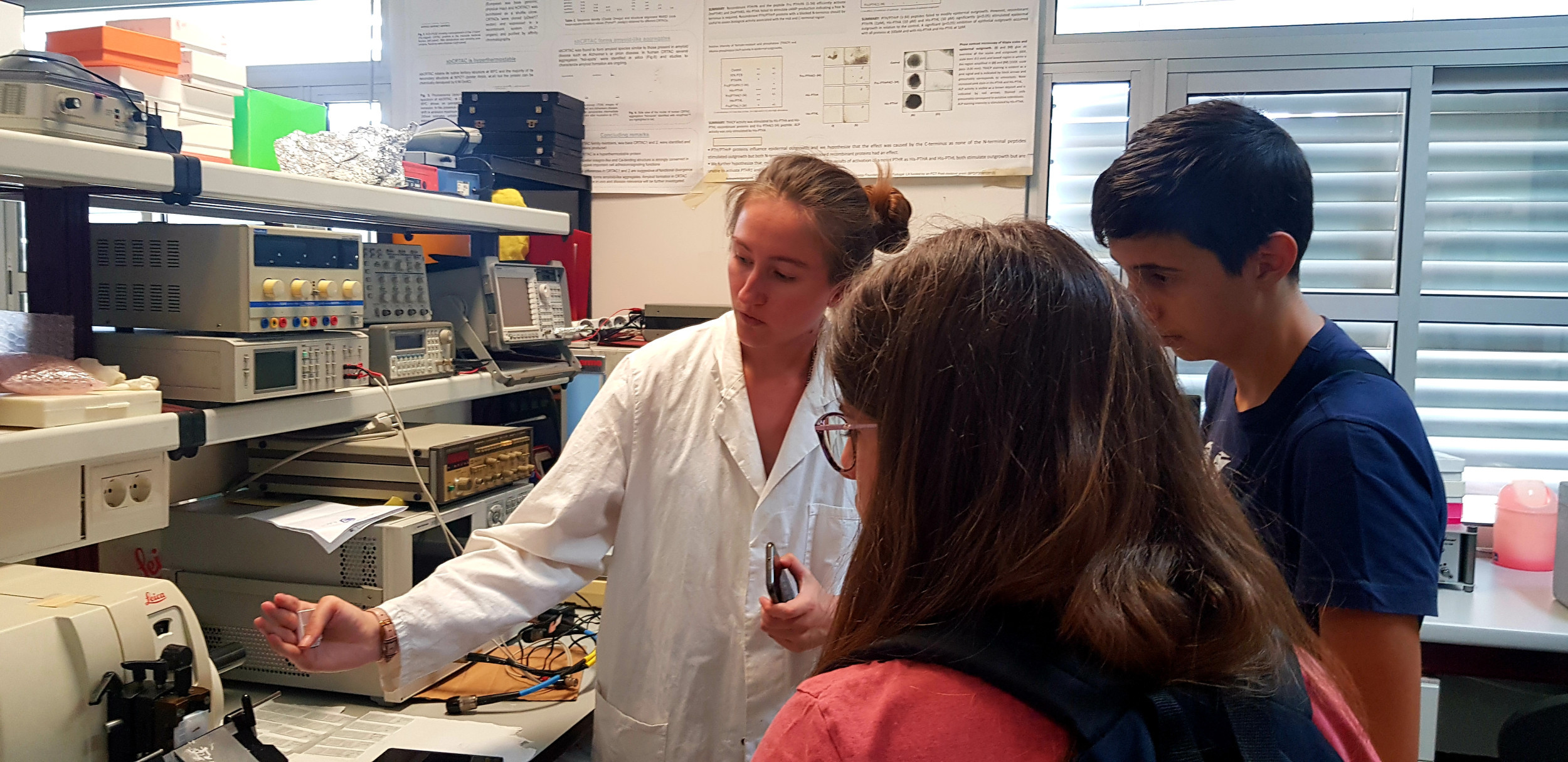
School Projects
Your class can explore science with ocean researchers through projects that bring students and scientists together to explore, discover, and take action for the ocean.
Scroll down for more information.
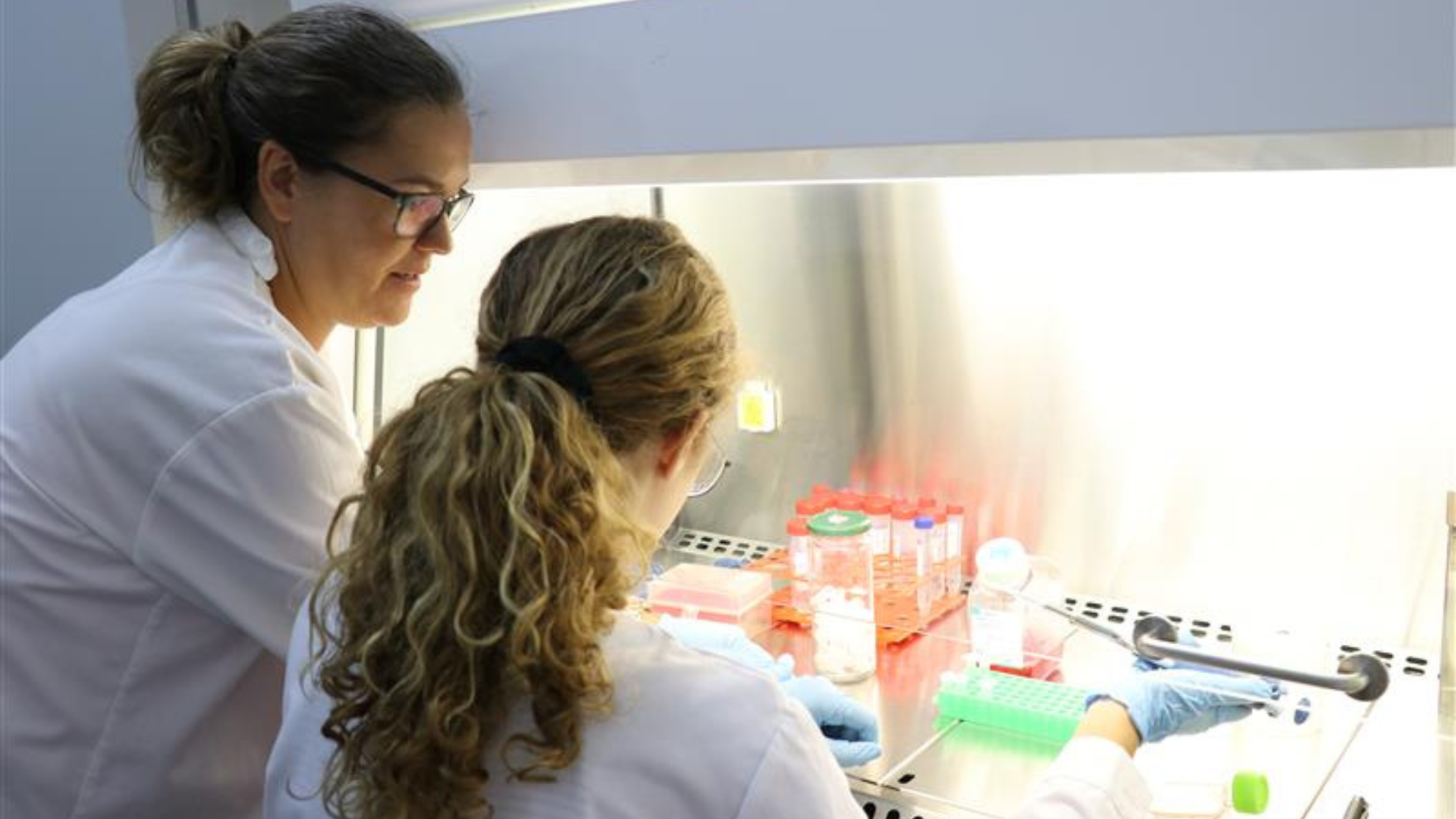
Summer Laboratory Internships
Young people can spend a week immersed in the world of marine research, collaborating with scientists and conducting scientific research at CCMAR.
Scroll down for more details.
Blue Agenda - First Semester 2026/2027
This is the lineup of activities that the CCMAR team offers to schools in the Algarve. Spots are limited—there is only one spot available for each date. Don’t wait: click the pre-reservation button below each activity type to check availability and make your pre-reservation.
Note: All of our activities require you to make a pre-reservation using the forms provided below. Activities will be confirmed on a first-come, first-served basis, so your reservation will only be officially confirmed once you receive a reply email. If you have any questions, please contact our team at ccmaroceaneducation@ualg.pt.
"Meet a Scientist" Lectures
Description: Lectures led by CCMAR researchers directly at the school. Each session covers current topics in marine science and provides an opportunity for dialogue with scientists.
Target audience: Elementary, middle, and high school students.
Duration: 45 min
Format: In-person at the school, preferably for groups of 2–4 classes (in an auditorium) or in blocks of 2–4 consecutive lectures. A teacher responsible for each participating class must always be present during the lectures.
Seahorses: between mystery and conservation
Researcher: Jorge Palma
Grade levels: Elementary, Middle, and High School
Geographic area: The entire Algarve
Available dates: Oct. 6, 26; Nov. 10, 26; Jan. 18, 27
Notes: Afternoon sessions only
Description: A journey into the discreet world of seahorses, where biology, behavior, and threats intertwine in a setting as fragile as it is fascinating. A lecture to discover what we don’t yet see—and what we can do to protect these unique species.
Hmm… what’s that smell?!! Exploring the sense of smell in fish
Researchers: Diana Gonçalves, Teresa Modesto
Grade levels: Elementary, Middle, and High School
Geographic area: Faro, Olhão, Loulé, São Brás de Alportel
Available dates: Oct. 13, 26, Nov. 3, 26, Dec. 11, 26, Jan. 11, 27
Description: Animals use their senses to communicate, find food, and even discover the ideal mate. In this activity, we will explore the importance of the sense of smell for various marine animals and learn how different species are able to “smell” underwater. We will also learn how pollution can interfere with this sense, which is essential to the animals’ lives.
Marine biology and oceanography
Researchers: Caio Ribeiro
Educational levels: Elementary, Middle, and High School
Geographic area: Faro
Available dates: Nov. 2, 26
Description: In this session, we’ll learn more about marine life and the processes that regulate the ocean, from the coast to the deep sea. I’ll also share what daily life is like aboard research vessels, showing how we conduct scientific research in the ocean and why this is important for understanding and protecting the planet.
Food waste: what can we do?
Researchers: João Cardoso
Grade Levels: Middle and High School
Geographic Area: Albufeira, Loulé, São Brás de Alportel, Faro, Olhão
Available Dates: Oct. 12, 26 (afternoon); Nov. 5, 26
Description: Did you know that one-third of all food produced ends up in the trash, contributing to serious social, economic, and environmental impacts? Food waste represents a massive waste of resources and energy, increasing carbon emissions in a context of a growing population and limited resources. This lecture aims to draw attention to this issue and raise awareness of the urgent need to take action to ensure the planet’s sustainability.
The science of the ocean — exploring physical and chemical concepts
Researchers: Joana Ferreira Leal
Grade Levels: Elementary School
Geographic Area: Portimão, Faro
Available dates: Jan. 12, 27
Description: This activity aims to educate participants about some of the chemical processes that maintain or disrupt the balance of the marine ecosystem, using concrete examples such as ocean acidification. The activity will also introduce biomolecules derived from marine organisms that have enormous bioactive potential and applications in various sectors.
What does a microscopy scientist do?
Researchers: Carina Mónico
Grade levels: Elementary, Middle, and High School
Geographic area: Faro, Olhão, Loulé, São Brás de Alportel
Available dates: Jan. 21, 27
Description: Did you know that there are scientists who spend their days capturing incredible photos and videos of life that we can’t see with just our eyes? In this talk, I’ll explain what bioimaging is and what it’s like to work with a microscopy platform, exploring a hidden world—from tiny marine creatures to the cells that sustain life. And as we magnify the invisible, we’ll discover how these images contribute to scientific progress and transform the way we see the world.
A portrait of the invisible world: the microbiome and its importance in life
Researchers: Patrícia Pinto
Grade Levels: 9th grade and High School
Geographic Area: Loulé, São Brás de Alportel, Faro, Olhão
Available dates: Nov. 26, 2026; Jan. 14, 2027
Description: Technological advances in high-throughput sequencing have allowed us to discover a wide variety of microbes that live in balance within our bodies or in our environment—microbes that were previously unknown and uncultivable. Most of these are harmless and even beneficial, helping us digest food, defend ourselves, and contributing to our food supply and the air we breathe, among many other functions. In this lecture, we’ll introduce you to a little of this “brave new world” that has evolved alongside us since our origins.
Bacteria and algae that clean the environment: environmental biotechnology in action
Researcher: Maria Clara Costa
Grade levels: 3rd cycle, High School
Geographic area: Entire Algarve
Available dates: Oct. 1, 26; Nov. 9, 26; Jan. 28, 27
Description: Pollution from heavy metals, pharmaceuticals, and microplastics threatens ecosystems and human health. Bacteria and algae act as true “living treatment plants,” capable of degrading or removing contaminants. Environmental biotechnology shows how natural solutions can make the future more sustainable.
Climate change and ecosystem resilience: the role of biodiversity
Researcher: Zélia Velez
Grade levels: 2nd, 3rd cycle, and high school
Geographic area: The entire Algarve
Available dates: Oct. 14, 26; Nov. 6, 26; Dec. 9, 26; Jan. 20, 27
Description: Climate change results primarily from increased CO₂ in the atmosphere, which causes global warming and environmental imbalances. Much of this CO₂ is absorbed by the oceans, causing ocean acidification and threatening marine species. This activity addresses this phenomenon, and, optionally, students can observe how changes in pH affect the calcified structures of marine organisms.
The little fish that climbs waterfalls
Researchers: Vânia Baptista and Joana Cruz
Grade levels: 1st, 2nd, and 3rd cycles
Geographic area: Albufeira, Loulé, São Brás de Alportel, Faro, Castro Marim, Vila Real de Santo António
Available dates: Oct. 22–26
Description: The “little fish,” which includes several endemic species of cabozes in São Tomé and Príncipe, has an amphidromous life cycle, migrating between rivers and the ocean and supporting important local fisheries. In recent years, communities have reported a decline in this resource, making it urgent to expand knowledge about its biology, ecology, and sustainable management. The activity combines a theoretical component with images and videos, followed by hands-on observation of larvae and adults.
Seagrasses?! What are they?!
Researchers: Inês Ferreira Guedes, Rita Costa Abecasis, João Neiva
Grade levels: Elementary, Middle, and High School
Geographic area: The entire Algarve
Available dates: Oct. 28, 26; Nov. 25, 26; Jan. 13, 26
Description: Beneath the sea’s surface lie seagrass meadows—true underwater forests that clean the water, protect marine life, and store large amounts of carbon. These forests are quietly disappearing, making it urgent for us to understand their importance. In this lecture, students are invited to explore this hidden world and discover the work of the RESTORESEAGRASS project in restoring these essential habitats.
Antarctica — climate change and science at the ends of the earth
Researcher: Pedro Guerreiro
Grade levels: 3rd cycle and high school
Geographic area: The entire Algarve
Available dates: Oct. 15, 26, Nov. 12, 26
Description: What is it like to live and conduct scientific research in one of the most extreme places on the planet?
In this lecture, we’ll travel to Antarctica and discover the importance of the polar regions for the Earth’s balance.
We’ll explore how global warming, melting ice, and other climate changes are transforming these environments.
We’ll learn about some of the organisms that manage to survive in extreme conditions and their incredible adaptations.
We’ll also see how scientists study the effects of climate change on living organisms.
And, through experiments and stories from the field, we’ll discover what daily life is like at a research station in Antarctica.
Underwater aliens — invasive species in our coasts, rivers, and reservoirs
Researcher: Pedro Guerreiro
Grade levels: Elementary, Middle, and High School
Available dates: Oct. 30, 26; Nov. 16, 26
Geographic area: The entire Algarve
Description: There are “aliens” hiding underwater—but they didn’t come from outer space!
These are exotic species that, through human activity, have made their way into our rivers, reservoirs, and coastal areas, and some have become invasive.
In this lecture/activity, we’ll find out who they are, where they came from, and how they managed to get here.
Fish, crustaceans, mollusks, and other organisms will serve as examples to help us understand the problem of biological invasions.
We’ll explore their effects on native species and on the biodiversity of our aquatic ecosystems.
And we’ll learn what scientists, authorities, and citizens can do to prevent new invasions and help detect those that already exist.
Connected lives: ecosystems, interactions and sustainability
Researcher: Susana Campar Almeida
Grade levels: Elementary, Middle, and High School
Available dates: Oct. 8, 26; Nov. 13, 26; Jan. 22, 27
Geographic area: The entire Algarve
Description: An exploration of how marine ecosystems function and the many relationships that connect organisms, habitats, and the environment. The lecture addresses biodiversity, food webs, and the interdependence among species, showing how changes in one part of the ecosystem can have consequences for the entire system and introducing the challenges associated with the sustainable use and conservation of marine resources.
From early life to today’s marine ecosystems
Researcher: Susana Campar Almeida
Grade levels: Elementary, Middle, and High School
Available dates: Oct. 16, 26; Nov. 23, 26; Jan. 19, 27
Geographic area: The entire Algarve
Description: A journey through the history of life in the ocean, from its origins to the extraordinary diversity of marine organisms we know today. The lecture explores how the evolution, adaptation, and diversification of species have shaped marine biodiversity, drawing on examples of different survival strategies and showing how science continues to discover and understand new forms of life.
Active engagement with the ocean - ecological restoration and enrichment initiatives
Researchers: Susana Campar Almeida
Educational levels: Elementary, Middle, and High School
Available dates: Oct. 29, 26; Nov. 20, 26; Jan. 29, 27
Geographic area: The entire Algarve
Description: A lecture focused on the different ways to protect, restore, and monitor marine and coastal ecosystems, bridging the gap between science and public participation. Through examples of conservation, ecological restoration, environmental monitoring, and citizen science, the lecture demonstrates how scientific knowledge can support management decisions and how schools, communities, and citizens can actively contribute to a healthier ocean.
The changing ocean: invasive species, pollution, and climate
Researchers: Susana Campar Almeida
Grade levels: Elementary, Middle, and High School
Available dates: Oct. 7, 26; Nov. 17, 26; Dec. 10, 26; Jan. 25, 27
Geographic area: The entire Algarve
Description: An overview of the major changes currently affecting the ocean and its biodiversity, including climate change, pollution, habitat loss, and invasive species. The lecture explores how organisms and ecosystems respond to these changes—from shifts in species distribution to processes of adaptation and resilience—and shows how scientific research helps us understand, predict, and mitigate these impacts.
Aquaculture as a food resource for our future
Researchers: Maria Leonor Ferrão
Grade levels: 3rd cycle, High School
Geographic area: Loulé, São Brás de Alportel, Faro, Olhão, Tavira
Available dates: Oct. 2, 26; Nov. 30, 26; Jan. 26, 27
Description: In this session, we will discuss how aquaculture is emerging as an essential food resource for our future, ensuring sustainable food production. By mastering breeding techniques, it is possible to increase production efficiency while preserving natural ecosystems.
The life cycle of the crab: from egg to adult and from native to invasive species
Researchers: João Monteiro
Educational Levels: Elementary, Middle, and High School
Geographic Area: Loulé, Faro, Tavira, Castro Marim, Vila Real de Santo António
Available dates: Oct. 13, 26, Nov. 19, 26, Jan. 27, 27
Description: This lecture will cover the life cycle of crabs, from egg to adult, and how to determine their sex. We will also discuss native and invasive species and how to prevent the spread of invasive species in Portugal.
Microorganisms: an invisible and amazing world!
Researcher: João Cardoso
Grade Levels: Middle and High School
Geographic Area: Albufeira, Loulé, São Brás de Alportel, Faro, Olhão
Available Dates: Oct. 9, 26; Nov. 11, 26
Description: Do you know what microorganisms are? And did you know that some can live in places where almost no other living thing could survive?
Microorganisms are microscopic living beings found in virtually every environment on our planet. Let’s learn about the main groups of microorganisms, understand just how small they are, and explore their incredible diversity and importance to ecosystems. We’ll discuss microorganisms that can survive in conditions that would be extreme for most living beings (extremophiles), with a special focus on halophilic microorganisms—which are capable of living in environments with very high salt concentrations, such as salt flats—and we’ll talk about their importance and potential applications in biotechnology, since they produce various molecules that are used today in industry, agriculture, and healthcare.
Ocean Literacy Workshops
Description: Thematic sessions with hands-on activities related to marine ecosystems, biodiversity, human impacts, sustainability, and marine science.
Location: At your schools
Target audience: Elementary, middle, and high school students.
Duration: Approximately 1.5 hours per workshop
Format: Hands-on, participatory sessions involving experimental and/or laboratory activities (1 workshop per class). Preference is given to blocks of 2–3 consecutive workshops. Workshops must always be supervised by a teacher responsible for each participating class.
“Micro and Marine Pollution”
Researchers: Patrícia Pinto
Grade levels: 2nd, 3rd cycle, and high school
Geographic area: Loulé, São Brás de Alportel, Faro, Olhão
Available dates: Nov. 24, 26 (morning period); Jan. 15, 27
Description: Presentation of the book “Micro and Marine Pollution” and demonstration of the AquaRov: monitoring of microplastics and micropollutants
What do the seagrass meadows conceal?
Researchers: Inês Ferreira Guedes, Rita Costa Abecasis
Grade levels: Elementary, Middle, and High School
Geographic area: The entire Algarve
Available dates: Oct. 20, 26; Nov. 27, 26
Description: In this *workshop*, students dive into the world of seagrass beds and discover why they are true guardians of the coast, biodiversity, and the climate. Through dynamic activities, they explore how restoration efforts—such as the **RESTORESEAGRASS** project—are bringing these essential habitats back to life. By the end, each participant will understand how they, too, can be part of this conservation mission.
Certified Teacher Training
SAVE THE DATE!
Description: Through this short training course, participants will be able to learn more about polar science. The training is certified.
It is offered by Polar Educators International and is part of the XVIII Portuguese Conference of Polar Sciences.
Target Audience: High school teachers
Duration: November 7, 2026, 9.30am to 1pm
Format: In-person, in Gambelas Campus, University of Algarve
Registration: More information about the program, certification, and registration will be available soon.
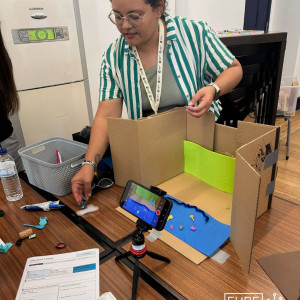
International Storytelling Competition
Description:
An international storytelling competition inviting young people to explore the fascinating world of marine bioprospecting and communicate marine science through creative digital storytelling. Participants are challenged to create a short video that brings a story of marine bioprospecting to life and shares it with an international audience.
Target Audience:
Students aged 15–18 enrolled in secondary school, vocational education or an equivalent programme.
Duration of the competition: from 17 September to 15 November 2026
Format:
International video storytelling competition. Students can participate individually or in groups of up to 5. Each participant or group can submit one video through a supervising teacher or educational institution.
Participation: Free. Video submissions should be sent via WeTransfer to ccmaroceaneducation@ualg.pt. All information about the competition can be found on the EUREMAP website.
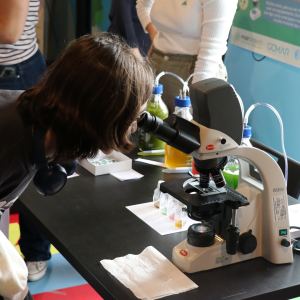
Marine Science Fair
Description: An annual event co-organized by CCMAR, CIMA, CCVAlg, and GreenCoLab. As part of Science and Technology Week, organized by the Ciência Viva Agency, this event features scientific demonstrations and interactive activities related to the ocean.
Target Audience: All age groups
Duration: November 26, 2026
Format: In-person
Registration: Through the CCVAlg platform
| Sun | Mon | Teu | Wen | Thu | Fri | Sat |
|---|---|---|---|---|---|---|
| 1 | 2 | 3 | ||||
| 4 | F | 6 | 7 | 8 | 9 | 10 |
| 11 | 12 | 13 | 14P9 | 15 | 16P15 | 17 |
| 18 | 19 | 20 | 21P10 | 22 | 23P2 | 24 |
| 25 | 26P18 | 27 | 28 | 29P16 | 30 | 31 |
| Sun | Mon | Teu | Wen | Thu | Fri | Sat |
|---|---|---|---|---|---|---|
| 1 | 2P3 | 3 | 4 | 5 | 6P9 | 7SAVE THE DATE |
| 8 | 9 | 10 | 11 | 12 | 13 | 14 |
| 15DEADLINE | 16 | 17 | 18 | 19 | 20P16 | 21 |
| 22 | 23P15 | 24 | 25 | 26P7/MSF | 27 | 28 |
| 29 | 30 |
November 7: SAVE THE DATE for Certified Teachers Training
November 15: DEADLINE for submitting videos of the International Storytelling Competition EUREMAP
November 26: Marine Science Fair
| Sun | Mon | Tue | Wed | Thu | Fri | Sat |
|---|---|---|---|---|---|---|
| 1 | 2 | 3P20 | 4 | 5 | ||
| 6 | 7 | 8 | 9 | 10 | 11 | 12 |
| 13 | 14 | 15 | 16 | 17 | 18 | 19 |
| 20 | 21 | 22 | 23 | 24 | 25 | 26 |
| 27 | 28 | 29 | 30 | 31 |
| Sun | Mon | Tue | Wed | Thu | Fri | Sat |
|---|---|---|---|---|---|---|
| 1 | 2 | |||||
| 3 | 4 | 5 | 6 | 7P20 | 8 | 9 |
| 10 | 11 | 12P5 | 13 | 14 | 15 | 16 |
| 17 | 18 | 19P15 | 20 | 21 | 22 | 23 |
| 24 | 25 | 26 P18 | 27 | 28 | 29P16 | 30 |

CCMAR Open Day 2027
Description: Guided tours of laboratories, experimental stations, and research facilities. Students learn about equipment, scientific methods, and ongoing projects.
Target Audience: High school students
Duration: 2–3 hours (9:30 a.m. – 12:30 p.m.)
Format: In-person at CCMAR
Dates: March 5, 2027
Registration: Using the forms below. Note: Limited number of groups.
Next semester, don't miss...
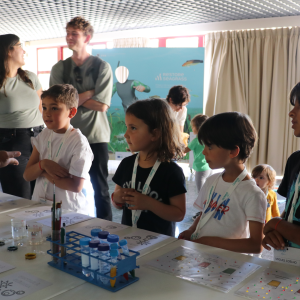
School Projects
Description: Collaborative projects developed over the course of several weeks, with guidance from our team, including citizen science and art-and-science activities.
Target audience: Elementary, middle, and high school students
Duration: Varies (medium-term)
Format: Varies
Registration: To receive information about school projects, contact ccmaroceaneducation@ualg.pt

Summer Laboratory Internships
Description: This program is part of the national initiative “Scientific Activities for Youth During Summer Break” (Ciência Viva). Participants work in research teams, learn laboratory techniques, and contribute to real-world projects.
Target audience: High school students (ages 16–18)
Duration: 1 week, July 2027 (dates to be determined)
Format: In-person at the CCMAR laboratories
Registration: Through the Ciência Viva platform; registration opens in late May 2027


