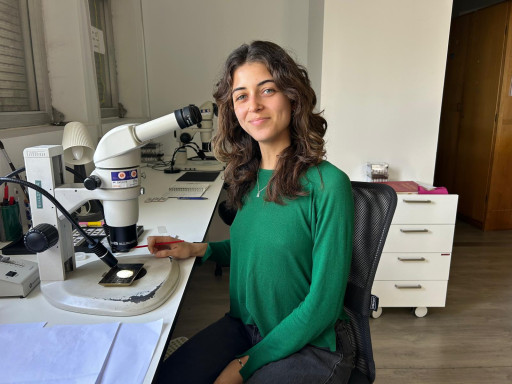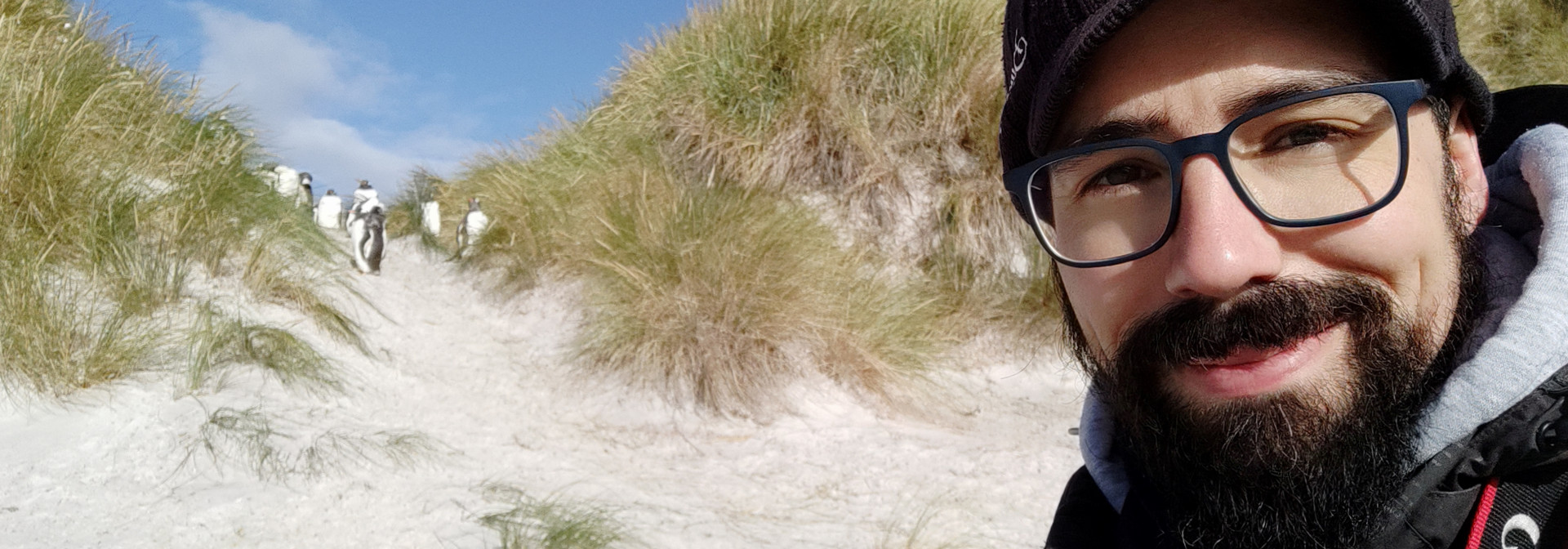
Cláudio Brandão has a connection with the ocean, both professionally and personally. After working with CCMAR a decade ago, he returns while completing the final stage of his PhD, jointly hosted by the University of Aveiro and the University of Technology Sydney, where he investigates the ecology, diversity and abundance of coral symbionts on the Great Barrier Reef, with a focus on Lizard Island. With a background in diving, sustainable spearfishing, and underwater photography, Cláudio now joins the Fisheries, Biodiversity and Conservation group to work on the Marine Guardian project, collaborating with local fishers to reduce the bycatch of endangered species and promote healthier coastal ecosystems.
Tell us a bit about the work you’ll be doing at CCMAR

My work focuses on collaborating with local artisanal fisheries, especially the beach seine (arte xávega), to assess the bycatch of endangered species, in particular cetaceans such as the common dolphin and the harbour porpoise. Together with fishers, we’re testing and implementing mitigation measures to help protect these key species and promote sustainable coastal ecosystems.
What do you enjoy doing outside of work?
Outside of work, I love spending time in the ocean, especially spearfishing, which I approach selectively and sustainably. I enjoy the full process, from responsible catching to sharing great meals with family and friends. I’m also passionate about photography, especially underwater macro photography, and I’ve had the opportunity to exhibit some of my photos at events organised by the University of Aveiro. In short, I’m happiest when I’m surrounded by the sea and nature.
What were you doing before you joined us?
Before joining CCMAR, I was undertaking my PhD jointly between the University of Aveiro and the University of Technology Sydney, studying the diversity and ecology of free-living Symbiodiniaceae, the microalgal symbionts of corals. My research focused on their role within the endolithic niche, a previously little-known habitat. I carried out several field trips to Australia and the Great Barrier Reef, with a focus on Lizard Island, deepening my understanding of marine ecosystems and their ecological complexity.