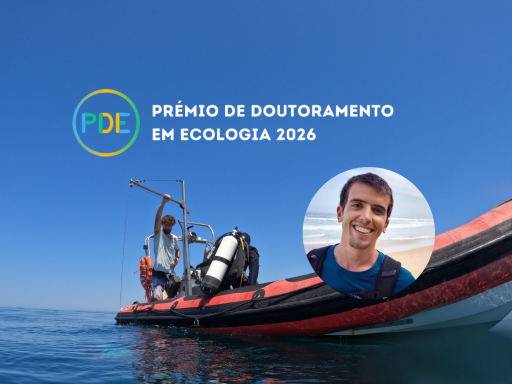
For the last four and a half years, during her doctoral thesis, Francisca Félix has dedicated herself to solving one of the biggest challenges in reproducing Senegalese sole in aquaculture: the reproductive problems of males born and raised in captivity. These problems have led to dependence on the capture of wild males, an unsustainable practice due to the negative environmental impact and the threat it poses to marine resources.
‘It is up to us, scientists and future leaders in the field, to steer research towards improving current practices and establishing good foundations for responsible production,’ she shares. With this motivation and environmental concern, Francisca focused on the biological rhythms of animals. She discovered that it is possible to collect better quality male gametes, naturally and non-invasively, if they are collected during the peak of melatonin production, at night. This discovery, based on animal chronobiology and physiology, applies to Senegalese sole and could benefit other species in aquaculture.

The results of this research have implications for both science and industry. In the scientific field, the methodologies developed can be used to identify and solve reproductive problems in various species. For the industry, improving male gametes' quality promises to increase fertilisation success in captivity, which contributes to more efficient and sustainable production.
Despite the crucial support from CCMAR, in terms of guidance and access to state-of-the-art equipment, as well as the great team that Francisca joined, the collaborations with aquaculture companies and organisations that work with wild sole stocks, such as Aqualvor in Lagos, IFAPA in Cádiz, IEO in Santander and IPMA, were indispensable for Francisca. ‘I would venture to say that the collaborations established during the thesis were central to its success. Only in this synergistic environment will it be possible to solve the various problems in aquaculture,’ she explains. These partnerships allowed her to carry out sampling in real-life conditions and to count on the support of a dedicated team, even during challenging night-time hours.

Now, with her thesis completed and almost 7 articles published, we congratulate Francisca on this remarkable achievement - which both advanced scientific knowledge and promoted more sustainable and responsible practices in the aquaculture industry.
For more details on Francisca's research, see her published articles here.
*Francisca Félix's thesis was co-funded and developed in partnership with the University of Murcia, which, in turn, provided its expertise and infrastructure.