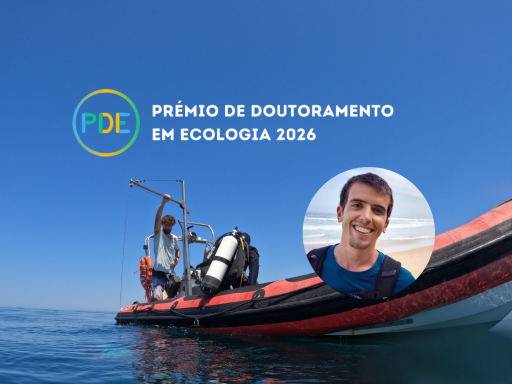
From an early fascination with large ocean animals to cutting-edge analyses of their movements across vast and remote environments, Miguel Gandra’s PhD journey has been driven by a simple but powerful question: how do some of the ocean’s largest and most elusive species actually live and move through the sea?
During his doctoral research, Miguel Gandra focused on the movement ecology and behaviour of marine megafauna, a group that includes sharks and other large-bodied marine species that play a crucial role in ocean ecosystems. Using a combination of acoustic telemetry, satellite tags, and high-resolution biologging sensors, he tracked animals across coastal, oceanic, and deep-sea environments, applying advanced computational and data-analysis approaches to reveal patterns that had remained largely invisible until now.
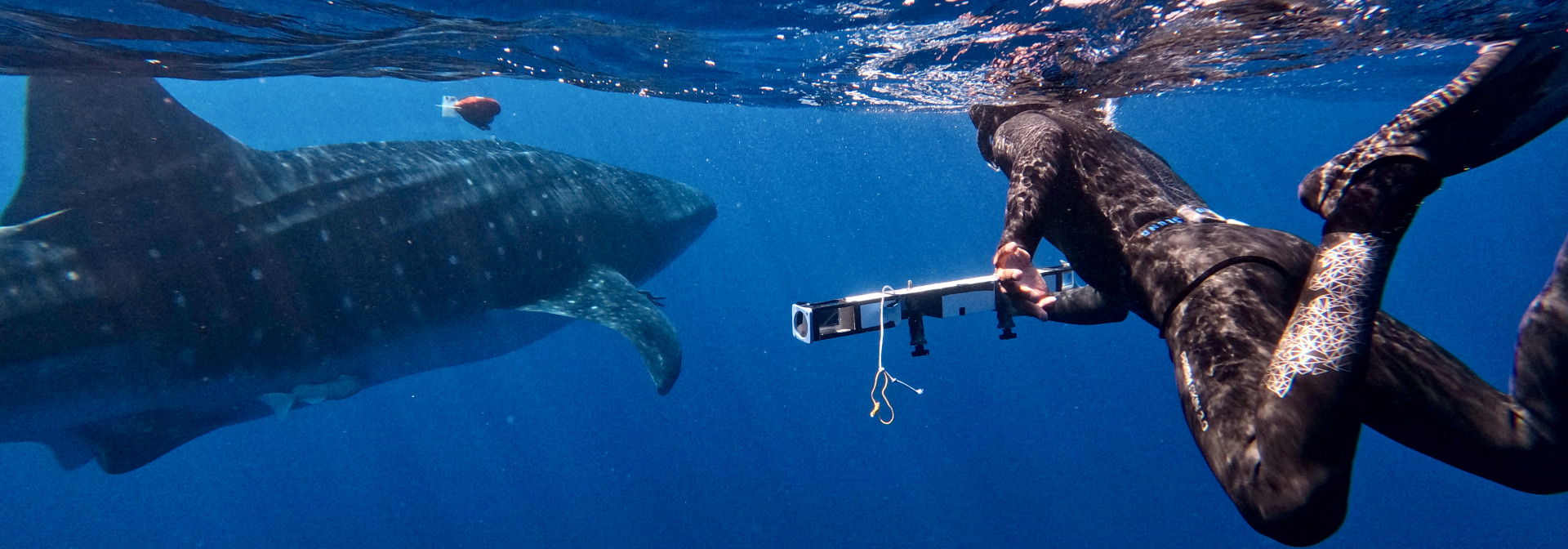
His work spanned very different marine worlds. Along the Iberian Peninsula, Miguel studied the meagre (Argyrosomus regius), a large coastal predator whose seasonal movements and migrations had been poorly understood. In the Azores archipelago, his research extended into the deep sea, focusing on endangered deep-sea sharks, such as the kitefin (Dalatias licha) and the bluntnose sixgill (Hexanchus griseus), as well as the whale shark (Rhincodon typus), the largest fish on the planet.


“Despite their ecological importance, we still know surprisingly little about how most of these species use their habitats, particularly in remote or deep-sea environments. Without this information, we risk implementing management measures that don't align with species' actual needs – or missing important areas altogether.”
This lack of knowledge is especially concerning given that many of these species are increasingly threatened by overfishing, habitat loss, and climate change. Beyond advancing scientific understanding, the implications of this work are deeply practical. Knowing where and when these animals move allows managers to identify essential habitats, migration corridors, and seasonally important areas – information that is vital for marine spatial planning, fisheries management, and the design of marine protected areas.
With a background in computational biology and data analysis, Miguel saw an opportunity to combine innovative tracking technologies with machine learning and advanced analytical tools. This approach revealed unexpected movement patterns, including long-distance migrations and strong site fidelity in deep-sea species previously assumed to roam widely. The work also resulted in the development of open-source tools that make these analyses accessible to researchers and managers worldwide — a step toward more transparent, collaborative, and effective ocean conservation.
This scientific journey was anything but solitary. Miguel highlights the fundamental role of his supervisors, David Abecasis (CCMAR) and Pedro Afonso (OKEANOS – Institute of Marine Sciences), whose mentorship and support guided the project from start to finish. He also credits his lab mates, Sebastian Kraft and Lucas Martínez-Ramírez, and the wider Azores biotelemetry team at OKEANOS, including Jorge Fontes, for sharing data, ideas, and unforgettable fieldwork experiences.
“CCMAR provided an exceptional research environment that made this work possible. Beyond the institutional support, the collaborative atmosphere and the opportunity to engage with a diverse community of marine scientists were fundamental in shaping both my research and my development as a scientist.”
Having completed his PhD, Miguel is now looking ahead. He intends to continue working in marine ecology and conservation, with a strong focus on translating scientific knowledge into real-world conservation action. His future plans include expanding international collaborations, applying these approaches to understudied species and regions, and continuing to develop open-source tools that democratise access to advanced analytic methods. Equally importantly, Miguel remains committed to science communication, aiming to bridge the gap between research, policy and ocean stewardship at a time of rapid environmental change.