A study published in Nature analysed 318 food webs from marine, freshwater and terrestrial ecosystems to show how biodiversity and food web structure influence key ecological functions.
Although the positive relationship between biodiversity and ecological functioning is well known, researchers from more than 20 institutions, including CCMAR, sought to gain a better understanding of how this link manifests itself in real, complex ecosystems around the world.
This focus on ‘how’ sets the study apart from previous work, as does its global scale.
Rather than merely demonstrating that greater biodiversity is associated with improved ecological functioning, the paper explores how the complexity of food webs can explain this relationship.
To this end, the team analysed 318 highly detailed food webs describing 144,020 interactions between 15,521 populations of organisms in marine, freshwater, and terrestrial ecosystems across various regions of the world. Using these networks, the researchers estimated energy flows — that is, the amount of energy circulating between resources, consumers, and predators — and tested the influence of diversity and trophic complexity on key ecosystem functions such as primary consumption and predation.
The results confirm that ecosystems with greater species diversity exhibit greater ecological functioning.
More importantly, however, they demonstrate that an increase in taxonomic diversity is accompanied by an increase in the number of trophic levels present and in the complementarity between predators. This makes food webs more complex and efficient in terms of energy flow.
In freshwater ecosystems, for instance, the functional diversity of predators was associated with predation fluxes that were up to 70 times higher, which highlights the crucial role that these organisms play in regulating ecosystems.
‘Species do not function in isolation; ecosystems function through networks of interactions,’ explains Benoît Gauzens, a researcher at the German Centre for Integrative Biodiversity Research (iDiv) and the study's senior author. ‘To understand and predict the consequences of changes in biodiversity, conservation efforts must extend beyond preventing species extinction to also protecting the ecological relationships that maintain the productivity and resilience of ecosystems.’
The results also show that the loss of predators, which are often the most vulnerable organisms to habitat destruction, pollution or climate change, can trigger cascading effects throughout the entire food web. This phenomenon, known as trophic downgrading, compromises essential ecological functions such as biological control and the maintenance of biodiversity and ecosystem stability.
The authors also note that these functions underpin many of the benefits that nature provides to society, ranging from the natural regulation of pests to the resilience of ecosystems in the face of environmental disturbances.
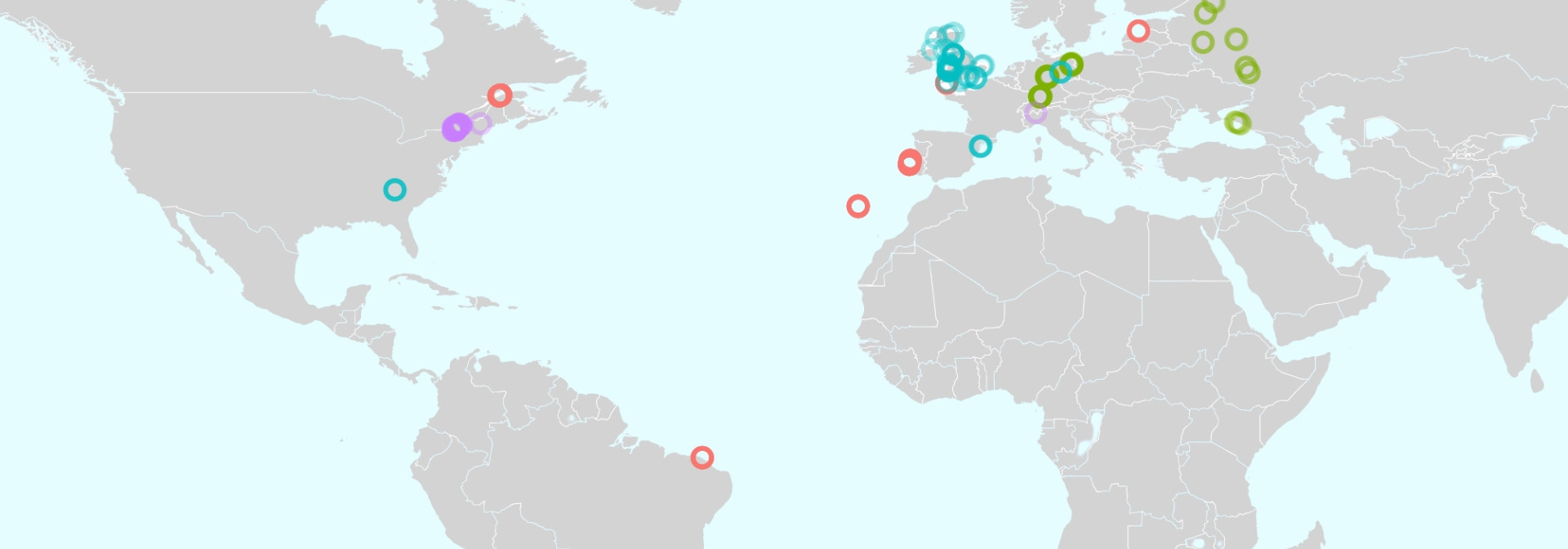
Catarina Vinagre was part of the international team responsible for this work, contributing data on 124 of the 318 food webs analysed.
These food webs were found in tidal pools that were studied on the west coast of Portugal, the island of Madeira, England, Canada, south-east and north-east Brazil, and Mozambique. Tide pools function as mesocosms, supporting high levels of biodiversity and trophic complexity. They are therefore interesting case studies for investigating interactions between species.
CCMAR’s participation reinforces the contribution of Portuguese research towards answering key scientific questions about biodiversity, ecosystem functioning, and the impact of environmental change.
Produzir carne a partir de células animais, sem necessidade de criar e abater animais, é uma das promessas da agricultura celular. No entanto, para que esta tecnologia seja viável em larga escala, é preciso resolver dois desafios práticos: como crescer grandes quantidades de células de forma eficiente, e como recolhê-las no final do processo para integrar em produtos de carne cultivada.
Um novo estudo publicado na revista Innovative Food Science and Emerging Technologies, que tem como primeiro autor Hélder Bandarra-Tavares, doutorando no CCMAR em colaboração com o Instituto de Bioengenharia e Biociências do Instituto Superior Técnico (iBB-IST), sob supervisão do Prof. Pedro Fonte e Prof. Ana Fernandes-Platzgummer, combina princípios de biologia celular, biomateriais e bioprocessamento para apoiar a transição de cultura de células animais para sistemas escaláveis e industrialmente relevantes.
O processo de criar carne cultivada começa com a recolha de células animais que são depois multiplicadas em laboratório.
Tal como muitas células do corpo humano, as células usadas neste estudo precisam de uma superfície sólida onde se agarrar para crescer - são as chamadas células aderentes. É aqui que entram as micropartículas: pequenas partículas que funcionam como suporte para as células, permitindo que se multipliquem na sua superfície.
Por sua vez, as micropartículas são utilizadas em sistemas de cultura celular em suspensão, que permitem atingir dimensões mais próximas de processos industriais. Neste estudo, a produção de células foi realizada num sistema de cultura em agitação semelhante ao que acontece em bioreatores industriais, mas em menor escala.
Os investigadores trabalharam com células derivadas do cordão umbilical de bovino.
Este tecido foi escolhido por ser rico em células com grande potencial de proliferação e por representar uma fonte que não envolve o sacrifício do animal, promovendo assim um processo de produção de carne cultivada focado em sustentabilidade e bem-estar animal.
Neste estudo, a equipa isolou células de três animais diferentes e testou várias condições de cultura para otimizar o seu crescimento. Um dos resultados mais relevantes foi o efeito do FGF-2, um fator de crescimento: a sua adição ao meio de cultura duplicou aproximadamente o número de células produzidas, tornando o processo mais eficiente.
O caminho para a escala industrial está aberto, mas persistem desafios.
Ainda assim, os autores reconhecem que a capacidade de multiplicação destas células continua a ser limitada para produção em larga escala, mas o trabalho estabelece uma plataforma que pode ser otimizada em estudos futuros.
A demonstração de que micropartículas funcionam para este tipo de células, e de que sistemas escaláveis de cultura permitem a sua produção de forma reprodutível e eficiente, representa um passo importante no desenvolvimento de processos para a agricultura celular.