Published on
A new study, involving CCMAR researcher Jorge Assis, maps the distribution of organic carbon in the sediments of European seas and identifies the key environmental conditions that determine where it accumulates.
Sediments on the seabed constitute an important reservoir of organic carbon. Remains of plants and animals, as well as material transported from land, are deposited on the seabed, and some of this carbon may remain buried there for centuries. Understanding where this carbon is concentrated is therefore important for gaining a better understanding of the carbon cycle in the oceans and assessing the potential impacts of activities that disturb the seabed.
Published in the scientific journal Global Biogeochemical Cycles, the study brings together 50,541 measurements of organic carbon in marine sediments from different regions of the European seas, ranging from the Arctic to the Mediterranean and the Black Sea. Using this data, the researchers combined information on habitats, sediment types and environmental conditions, and employed machine learning techniques to identify the main factors associated with carbon distribution.
The results show that a relatively small set of physical conditions accounts for much of the observed variation. Exposure to wave action proved to be the most important factor, accounting for around 32 per cent of the variation, followed by light availability (14 per cent), seabed geomorphology (10 per cent) and maximum water temperature near the seabed (9 per cent). Overall, the model explained around 53 per cent of the observed variability.

“We expected carbon to accumulate in calmer areas. What surprised us was realising the extent to which the pattern observed on a continent-wide scale can be explained by a limited set of physical conditions,” says Jorge Assis, a researcher at CCMAR. “The fact that exposure to wave action, on its own, accounts for around a third of the variation is particularly useful, because it allows us to map these conditions everywhere, including large areas of the seabed where samples have never been collected.”
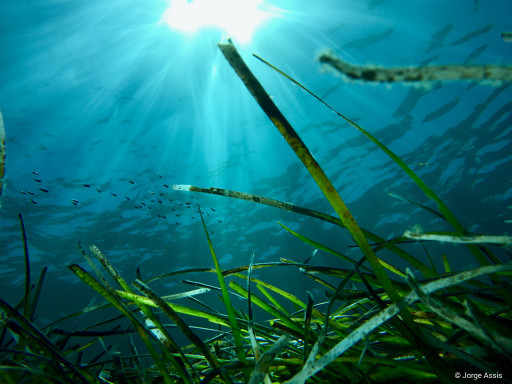
The results indicate that sediments located in coastal and more sheltered areas, which are subject to less wave action, tend to have higher organic carbon contents. Areas with high values were identified in parts of the Baltic Sea, the North Sea, the Adriatic Sea, the Barents Sea and the Black Sea. Habitats with vegetation also stood out: sediments associated with the presence of Posidonia oceanica had, on average, the highest carbon contents amongst the sediment classes analysed, followed by other seagrass beds, muddy sediments and mixed sediments.
CCMAR contributed to the study through environmental analysis, modelling and mapping. The data used included variables from Bio-ORACLE v3.0, a global database of marine environmental information that includes, amongst other things, data on temperature, salinity, water velocity, transparency and oxygen. The code used in the modelling is open-source and publicly accessible.
The analysis enabled an estimate to be produced of the distribution of organic carbon in sediments across European seas, including areas where there are few or no samples. The model is, however, better suited to identifying regional patterns than to making predictions at the level of specific sites, where the variability of environmental and biological conditions can be very high.
The results of the study are important in that they can contribute to the planning and conservation of marine areas, particularly in assessing the potential impacts of activities that disturb sediments, such as bottom trawling and dredging. The authors emphasise, however, that carbon should not be considered in isolation when setting conservation priorities, but should be weighed up alongside biodiversity, human pressures and other ecological factors.
The study was led by Aarhus University in Denmark and brings together researchers from four European countries: Denmark, Norway, Portugal and the United Kingdom. The work forms part of the European MPA Europe project, co-funded by the European Union through the Horizon Europe programme, which aims to strengthen the scientific basis for the planning of marine protected areas in European seas.
About the study
Lønborg, C., Graversen, A. E. L., Addamo, A. M., Assis, J., Burrows, M. T., Stewart, E., Lillis, H., Costello, M. J., & Krause-Jensen, D. (2026). Drivers and Patterns of Sediment Organic Carbon in European Regional Seas. Global Biogeochemical Cycles, 40, e2026GB009100. Publicado a 16 de agosto de 2026.
DOI: 10.1029/2026GB009100
Link: https://agupubs.onlinelibrary.wiley.com/doi/10.1029/2026GB009100