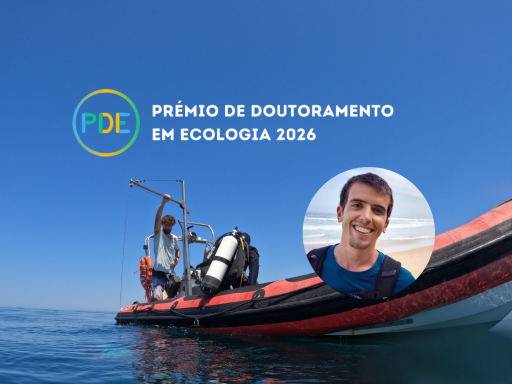
Throughout his doctoral thesis, João Brazão dedicated himself to improving the way in which evolutionary relationships between species are estimated using genetic data in the construction of evolutionary (or phylogenetic) trees. His research focused on improving genetic analysis models, especially for past historical events, such as the transition from aquatic algae to terrestrial plants around 500 million years ago.

"As a biologist, I've always been fascinated by understanding how species evolve. That's why using bioinformatic analyses to answer these evolutionary questions was a major motivation for choosing this topic.", explains João.
Although it is a powerful tool, the process of building these evolutionary trees is complex due to the different ways in which species have evolved. This complexity can lead to the inappropriate use of generic models, i.e. the inherent data (the genetic information) of these species when analysed with generic models can result in inaccurate phylogenetic trees.
In his thesis, João focussed on finding more precise methods that take these variations into account, with models developed specifically for the data being analysed. By developing more appropriate methods for the specific data, the researcher was able to more accurately reconstruct evolutionary relationships, with particular emphasis on the evolution of plants from algae.

"Understanding how species relate and evolve has numerous applications not only for science but also for society, from classifying new species to studying the origin of disease outbreaks,’ explains the young researcher.
During his doctorate, João relied on our technical help. Access to the CETA-Hub, CCMAR's high-performance computing cluster, enabled him to analyse genetic data on a massive scale. In addition, collaborations with institutions such as the Natural History Museum in London have enriched his research, providing opportunities for learning and collaboration with world experts in phylogenetics. ‘Without these partnerships, the progress of my research would have been significantly slower,’ João admits, emphasising the importance of the collaborative environment.

Now that his thesis is complete, he intends to continue his research analysing algal genomes, combining advanced phylogenetic and genomic approaches to discover evolutionary patterns and genetic adaptations.
Among his published articles is "Data-specific substitutions models improve protein-based phylogenetics", where João challenges the use of generic models in the analysis of protein sequences and demonstrates the advantages of using models optimised for specific data.
For more details on this research, you can consult his published articles [here].