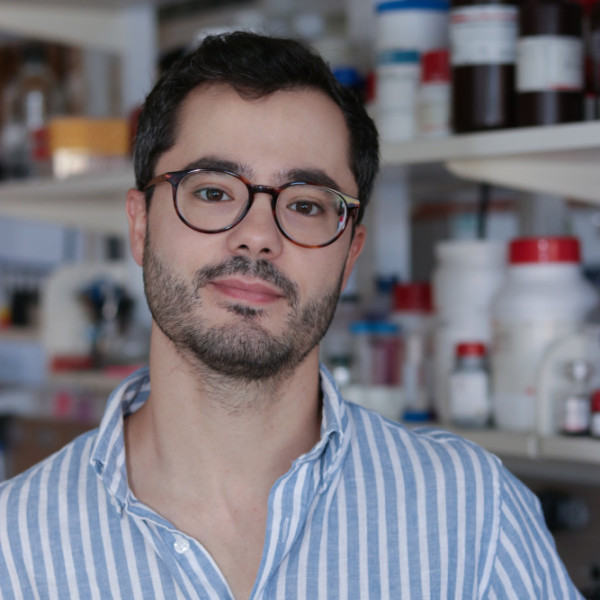
Horizon Europe ERA Fellow (MSCA/WIDERA framework)
How are environmental cues detected, integrated, and translated into reproductive decisions? My research focuses on understanding how abiotic factors, particularly temperature, shape reproductive physiology and behaviour in teleost fish. I am interested in how environmental information is detected by sensory systems and integrated within the brain to regulate endocrine state, reproductive behaviour, and ultimately reproductive success.
My work investigates how temperature influences sexual motivation, courtship, spawning behaviour, and endocrine dynamics, as well as how thermal conditions experienced early-life can have lasting effects on gonadal development and the formation of neural circuits underlying reproduction. By combining behavioural, endocrine, developmental, neurobiological, and genetic approaches, I aim not only to identify the neural mechanisms linking environmental cues to reproductive function, but also to test their causal role by experimentally disrupting candidate pathways using genetic knockouts and targeted neuronal manipulations.
More broadly, my research seeks to understand how environmental variation shapes reproductive strategies and how these mechanisms may differ across species and ecological contexts. Understanding how teleost fish translate changing environmental conditions into reproductive decisions is particularly important in the context of global climate change, where increasing temperatures may profoundly affect reproductive success, population persistence, and biodiversity.