
Published on
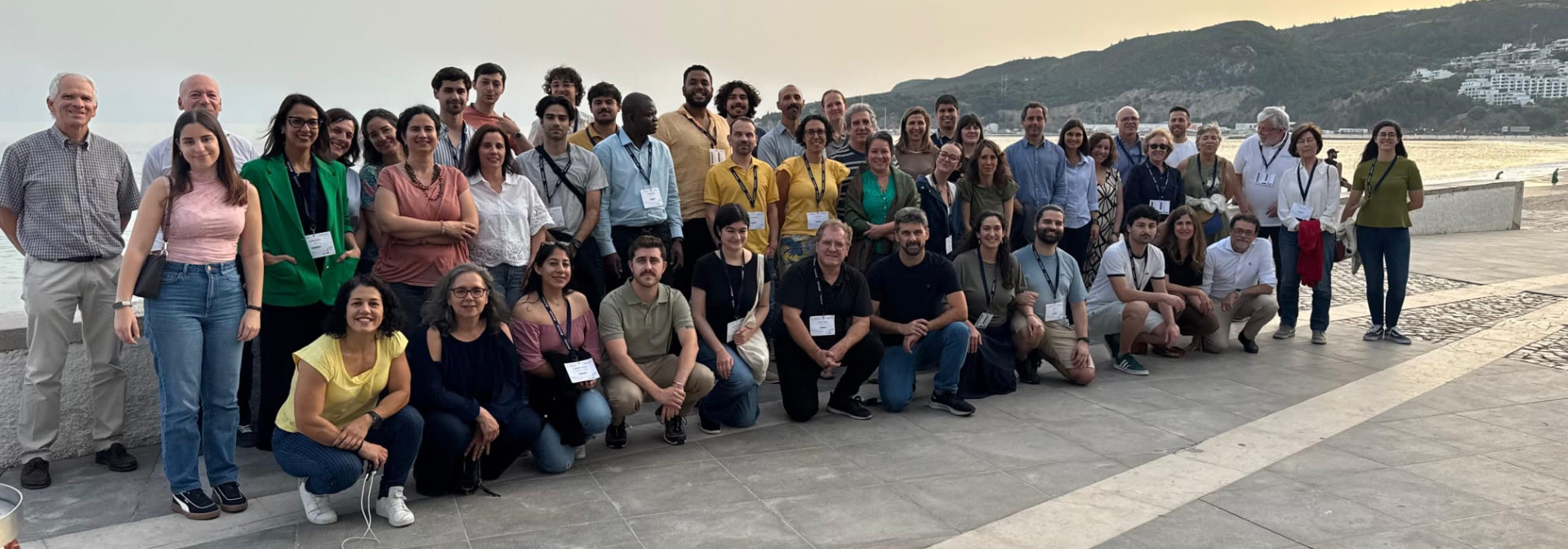
CCMAR – Centre of Marine Sciences – took part in the 2026 Oceanography Meeting (EO2026), organised by the Portuguese Oceanography Association (APOCEAN), on 21 and 22 May in Sesimbra. The meeting brought together researchers and students from different fields of oceanography to discuss some of the key scientific challenges associated with the ocean, ranging from climate dynamics and ocean circulation to environmental monitoring, marine biodiversity and ecotoxicology.
In a context where ocean knowledge is becoming increasingly important for understanding the impacts of climate change, supporting the sustainable management of marine resources and developing environmental monitoring strategies, EO2026 reaffirmed oceanography as a core area of marine science.
CCMAR was represented by researchers from the OC2 and ECHO groups. Representing the OC2 group were Lívia Gebara, Lélia Matos, Fátima Abrantes, Emília Salgueiro, Miguel Santos (President of APOCEAN), Paulo Relvas and Carlos Sousa. The ECHO group was represented by Caio Cesar Ribeiro and his students Graziele Silva, Murilo Guimarães and Miguel Domingos.
Over the course of the two days, researchers from CCMAR presented a number of oral papers on physical, chemical and biogeochemical oceanography, marine ecotoxicology and ocean observation.
Among the papers presented, the following stood out:
- Baseline spatial and biogeochemical variability in Maxwell Bay (Antarctica), presented by Graziele Silva, as part of the research carried out by CCMAR in Maxwell Bay, on King George Island, Antarctica;
- Cytotoxicity of Fluoxetine in Hemocytes of Marine Bivalves Crassostrea brasiliana and Mytella charruana, presented by Miguel Domingos; and
- Mediterranean Outflow Water at anomalously shallow depths along the Portuguese continental margin, presented by Caio Cesar Ribeiro, in a collaboration between the ECHO and OC2 groups.
A presentation entitled The EMSO ERIC Iberian Margin Regional Facility: Infrastructure Development and Scientific Scope, was also given by Carlos Sousa, focusing on the development and scientific scope of the European marine observation infrastructure EMSO ERIC.
In the field of paleoceanography and climate change, Emília Salgueiro presented the paper “Linking oceanographic conditions to planktonic foraminifera distribution along the western Iberian Margin”, focusing on the relationship between oceanographic conditions and the distribution of planktonic foraminifera along the Iberian margin. Fátima Abrantes, meanwhile, contributed to the paper "Impact of climate warming in the coastal upwelling system and primary production off Portugal: a study linking classical and emergent proxies", which examined the impacts of climate warming on Portuguese coastal upwelling systems and marine primary productivity.
CCMAR also contributed to the poster session with papers focusing on the coastal dynamics of the Cape St Vincent region and the use of new ocean observation technologies, including ‘Resolving coastal mesoscale and sub-mesoscale structures south of Cape St Vincent using SWOT altimetry’ and ‘Coastal upwelling in the Cape St Vincent region as observed by an autonomous profiler’, both with the participation of Paulo Relvas.
One of the highlights of the meeting was the tribute paid to researcher Fátima Abrantes, in recognition of her scientific career and contribution to the development of oceanography in Portugal.
CCMAR was also involved in organising the event through the participation of Rita Esteves (IPMA/CCMAR) on the organising committee.
Held every two years, the Oceanography Meeting promotes the sharing of knowledge between different areas of marine science and encourages interdisciplinary collaboration between researchers and students. The 2026 edition once again highlighted the strategic role of oceanography in understanding and monitoring the ocean in a context of rapid environmental change.


