
Model-EDC

The Model-EDC network and workshop series: Threats of endocrine-disrupting compounds and environmental pollutants to the marine biosphere, translating models to real life
Funding agencies
Project Activities
The Model-EDC network and workshop series: Threats of endocrine-disrupting compounds and environmental pollutants to the marine biosphere, translating models to real life
Model-EDC network summary
Backgound
A healthy ocean regulate global climate, is a source of oxygen and is central to major economic activities. A vast and unstudied marine biodiversity is vulnerable to chemical pollutants such as the endocrine disrupting chemicals (EDC), which can interfere with hormonal actions and cause adverse biological outcomes, from cellular to organism and population levels. Many anthropogenic EDCs have high environmental persistence, bioaccumulation, biomagnification, toxicity at low doses and/or sub-lethal impacts in model organisms, but their impacts are poorly studied in marine taxa.
Aims
Inspired by the UN Decade of Ocean Science (2021-30), the Model-EDC network (coordinated by Dr. Patrícia Pinto, CCMAR) joins the contributions from >80 experts on Endocrine Disruption and Comparative Endocrinology that revise knowledge gaps and call for global coordinated actions to reduce, regulate and manage EDC biological impacts in marine life, which is still mainly assessed using freshwater species.
The Model-EDC workshop series
Euromarine funded Model-EDC to gather a network and carry out a series of Foresight Workshops with the following aims:
1. Map current assays and models of risk assessment and monitoring for EDCs in vertebrate and invertebrate marine organisms.
2. Discuss how predictive and representative current models are (mostly freshwater species) for the marine organisms, considering their great taxa diversity, their interconnection and possible biomagnification of EDC/toxicant effects across the food chain.
3. Assess the gaps in knowledge while taking into consideration exposure to single chemicals or complex mixes from a biological and chemical perspective.
The Model-EDC workshop 1st edition (online)

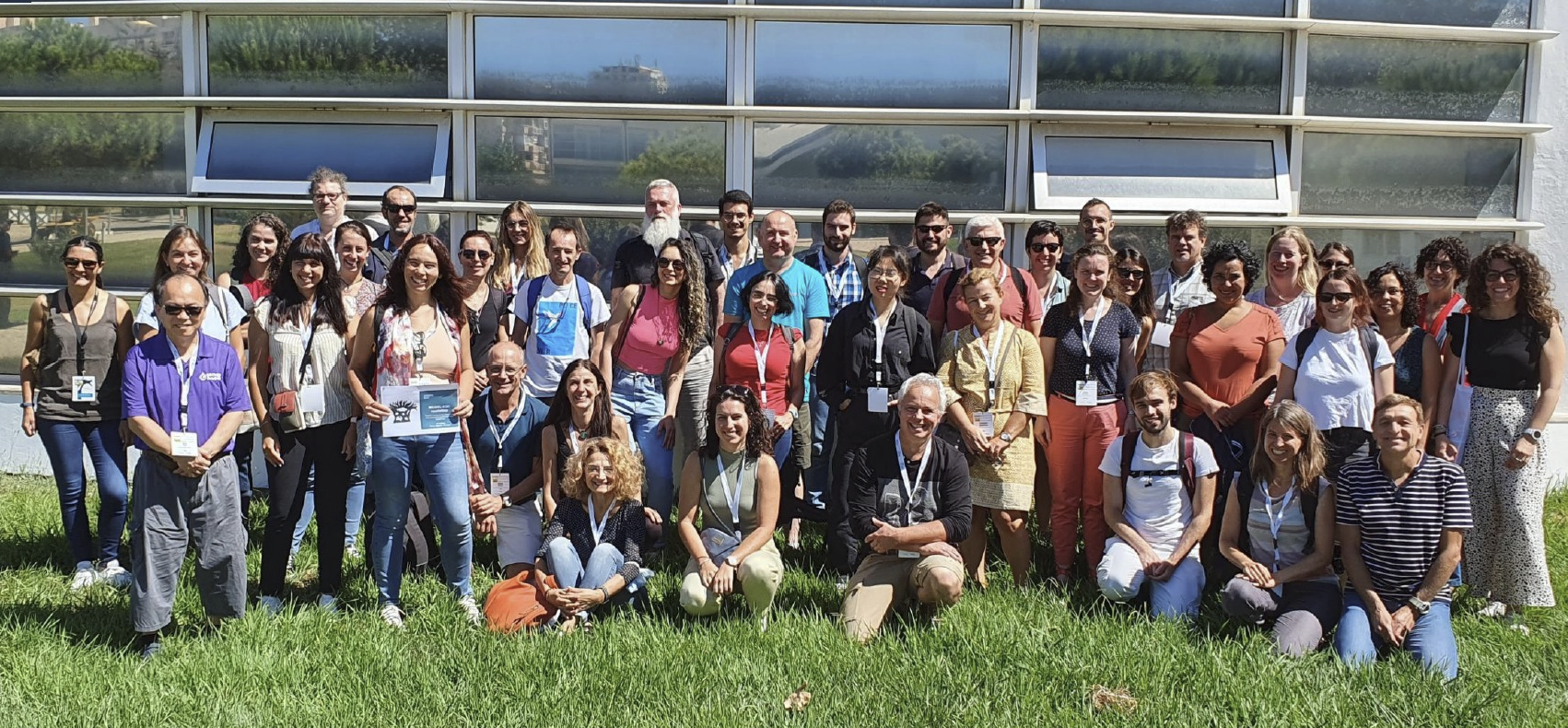
The 1st edition of Model-EDC was carried online in November 2021 and was co-organized by Dr Patrícia Pinto and Dr. Deborah Power (CCMAR, Pt), Dr. Ioanna Katsiadaki (CEFAS, UK), Dr Joachim Sturve (UGot, Se) and Dr. Tiphaine Monsinjon (ULHN, Fr), supported by the CCMAR communication office. It joined online for two days a network of 18 speakers (specialists in ecotoxicology, environmental protection, testing, regulation and monitoring in Europe and the USA) and 35 attendees from 20 countries (total of 53 participants) and it included 4 lecture sessions and 2 work group discussion sessions. The workshop was free of charge, was open to CCMAR and external participants and part of the CCMAR Advanced Technologies and Training (ATT) offer.
The Model-EDC workshop 2nd edition (Faro, satellite of CECE-ISFE)

The 2nd edition of Model-EDC was co-organized by Dr Patrícia Pinto, Dr. Deborah Power, Dr. Ioanna Katsiadaki, Dr Joachim Sturve and Dr. Tiphaine Monsinjon as a satellite workshop of the joint 30thCECE-9thISFE international conference held in Faro, Portugal, in September 2022. It joined 4 speakers and 45 attendees (total of 49 participants) for 1 day, including lectures summarizing the Model-EDC1 outcomes and working group discussions to contribute to identify gaps and issue recommendations. This open workshop (part of CCMAR ATT offer and open to CECE-ISFE conference participants) was followed by a 1-day meeting of the core Model-EDC network Working Group, which created the first draft of the literature review in September 2022, and subsequent drafts benefited from contributions of additional international experts during 2023-2024.
In addition, the Model-EDC organizers were also responsible for one session on “Endocrine Disruption: current status and challenges” at the joint CECE-ISFE conference.
The Model-EDC poster, presented at SETAC Europe, Seville, May 2024
How to protect marine life from Endocrine Disrupting Pollutants?
Pinto PI1*, Miglioli A2, Baumann L3, Blanc-Legendre M4, Knigge T5, Dumollard R2, Cancio I6, Cousin X4, Baynes A7, Ford A8, Minier C5, Monsinjon T5, Monteiro MS9, Sturve J10, Power DM1, Katsiadaki I11
1Centro de Ciências do Mar (CCMAR), Universidade do Algarve, 8005-139 Faro, Portugal. 2Institut de la Mer de Villefranche sur Mer (IMEV), 06230 Villefranche sur Mer, France. 3Amsterdam Institute for Life and Environment, Vrije Universiteit Amsterdam, 1081 HV Amsterdam, The Netherlands. 4MARBEC, Univ Montpellier, CNRS, Ifremer, IRD, INRAE, Palavas, France, 34250 Palavas-Les-Flots, France. 5Environmental Stress and Aquatic Biomonitoring (SEBIO), Université Le Havre-Normandie, 76600 Le Havre, France. 6Plentzia Marine Station/University of the Basque Country (PiE-UPV/EHU), Areatza 47, 48620 Plentzia, Basque Country, Spain.7Brunel University London, Kingston Lane, Uxbridge, Middlesex, UB8 3PH, UK. 8Institute of Marine Sciences, University of Portsmouth, Portsmouth, Hampshire PO4 9LY, UK. 9CESAM & Departmento de Biologia, Universidade de Aveiro, Campus de Santiago, 3810-193, Aveiro, Portugal. 10University of Gothenburg, Gothenburg, Sweden. 11Centre for Environment, Fisheries and Aquaculture Science (CEFAS), Weymouth Laboratory, Dorset DT4 8UB, UK. *Email: ppinto@ualg.pt.
Abstract:
Our oceans are the final sink for anthropogenic pollutants, including endocrine disrupting chemicals (EDC). However, no marine species are part of the regulatory test guidelines concerning EDC hazard assessment and marine monitoring programmes, at least in Europe, do not have the obligation to report on biological effects caused by chemicals including EDCs. To evaluate the state of knowledge on basic endocrinology and endocrine disruption in marine organisms, we carried out literature research across twenty vertebrate and invertebrate taxa characterized by a high number of marine species. This review assessed more than 25,000 articles and revealed that the current knowledge on key molecular targets of the endocrine and neuroendocrine pathways is scarce and fragmented with respect to marine biodiversity. One third of the publications concerned freshwater fish and almost two thirds focused on vertebrate steroid hormones. Articles dealing with ED in marine species accounted for only 5% of the literature whilst only 1% investigated hormones other than vertebrate steroids (i.e. ecdysteroids). Marine annelids, molluscs, crustacea, echinoderms and other marine invertebrates, composing more than three quarters of marine fauna and playing key ecological roles, remain widely understudied in terms of endocrine disruption. A unique example of population-level impacts and endocrine disruption in marine animals is the well documented population crashes of marine gastropods driven by exposure to the infamous tributyltin (TBT), a now banned antifouling agent, which caused imposex in neogastropod snails globally. The lack of fundamental knowledge on marine invertebrates’ endocrine system resulted in misinterpretation of the biological pathway perturbed, highlighting that transposition of vertebrate endocrinology to non-vertebrate taxa hinders both hazard and risk assessment of chemicals in the marine environment. The substantial knowledge gaps concerning EDCs across marine biodiversity call for urgent and targeted research efforts on marine taxa. Notably, existing knowledge and future research outcomes need to be translated into international regulatory testing, monitoring and ultimately protection of our oceans. Motivated by the Ocean decade, we highlight the importance of marine biodiversity for ecosystem services, climate mitigation, food security and the Blue Economy and call for joint efforts to investigate and monitor endocrine disruption in the marine environment.
The Model-EDC review paper: “Prioritizing Research on Endocrine Disruption in the Marine Environment: a Global Perspective”
This review is co-signed by 24 co-authors from different countries from Europe, America and Asia. It was published at Biological Reviews in February 2026.
Download here or from the journal webpage.
Acknowledging the main contributors to the Model-EDC network
The main contributors to the Model-EDC network, including workshop speakers, key participants and position paper co-authors (highlighted in bold) are listed below:
- Adam Lillicrap (Norwegian Institute for Water Research – NIVA, Norway)
- Alex Ford (University of Portsmouth, UK)
- Alice Baynes (Brunel University London, UK)
- Alice James Casas (INERIS – French Institute for Industrial Environment and Risks, France)
- Ana Coimbra (UTAD, Portugal)
- Ana Gómez (Instituto de Acuicultura Torre de la Sal – IATS, CSIC, Spain)
- Ana Patrícia Mateus (CCMAR, Universidade do Algarve, Portugal)
- Angelica Miglioli (Institut de la Mer de Villefranche sur Mer, France)
- Arianna Servili (LEMAR, Ifremer, Portugal)
- Bethanie Carney Almroth (University of Gothenburg, Sweden)
- Carla Quintaneiro (Universidade de Aveiro / CESAM, Portugal)
- Carlie LaLone (US Environmental Protection Agency, USA)
- Christopher Green (Department for Environment, Food and Rural Affairs – Defra, UK)
- Deborah Power (Centre of Marine Sciences – CCMAR, Portugal)
- Francesca Maradonna (Università Politecnica delle Marche, Italy)
- Gerald Ankley (US Environmental Protection Agency, USA)
- Henrik Holbech (University of Southern Denmark – SDU, Denmark)
- Hiroshi Yamamoto (National Institute for Environmental Studies – NIES, Japan)
- Ibon Cancio (University of the Basque Country – UPV/EHU, Spain)
- Ioanna Katsiadaki (Centre for Environment, Fisheries and Aquaculture Science – Cefas, UK) * co-organizer and corresponding author
- Joachim Sturve (University of Gothenburg, Sweden) * co-organizer
- John Bignell (Centre for Environment, Fisheries and Aquaculture Science – Cefas, UK)
- Ksenia Pazdro (Institute of Oceanology, Polish Academy of Sciences, Poland)
- Leif Norrgren (Department of Biomedicine and Veterinary Public Health, Sweden)
- Lisa Baumann (Vrije Universiteit Amsterdam, The Netherlands)
- Magdalena Chadzinska (Institute of Zoology and Biomedical Research, Jagiellonian University, Poland)
- Maren Ortiz-Zarragoitia (Plentzia Marine Station – PiE, University of the Basque Country, Spain)
- Marta Monteiro (University of Aveiro, Portugal)
- Mélanie Blanc-Legendre (MARBEC, France)
- Nicolas Buisine (Muséum National d'Histoire Naturelle, France)
- Oliana Carnevali (Università Politecnica delle Marche, Italy)
- Patricia Pinto (Centre of Marine Sciences – CCMAR, Portugal) * coordinator and corresponding author
- Peter Matthiessen (Independent Consultant in Ecotoxicology, UK)
- Philipp Antczak (Center for Molecular Medicine Cologne – CMMC, University of Cologne, Germany)
- Philippa Kearney (Department for Environment, Food and Rural Affairs – Defra, UK)
- Rémi Dumollard (Institut de la Mer de Villefranche sur Mer, France)
- Renata Jurema Medeiros (National Institute for Quality Control in Health – INCQS, Fiocruz, Brazil)
- Ron van der Oost (Waternet Water Cycle Institute, The Netherlands)
- Salima Aroua (Université Le Havre-Normandie – ULHN, France)
- Seta Noventa (Italian Institute for Environmental Protection and Research – ISPRA, Italy)
- Steven Brooks (Norwegian Institute for Water Research – NIVA, Norway)
- Taisen Iguchi (Yokohama City University, Japan)
- Thomas Knigge (Université Le Havre-Normandie, France)
- Tiphaine Monsinjon (Université Le Havre-Normandie, France) * co-organizer
- Xavier Cousin (MARBEC, France)
- Yong Zhu (East Carolina University, USA)
- ZhiChao Dang (National Institute for Public Health and the Environment – RIVM, The Netherlands)
CCMAR Coordinators


Main Funding Support


